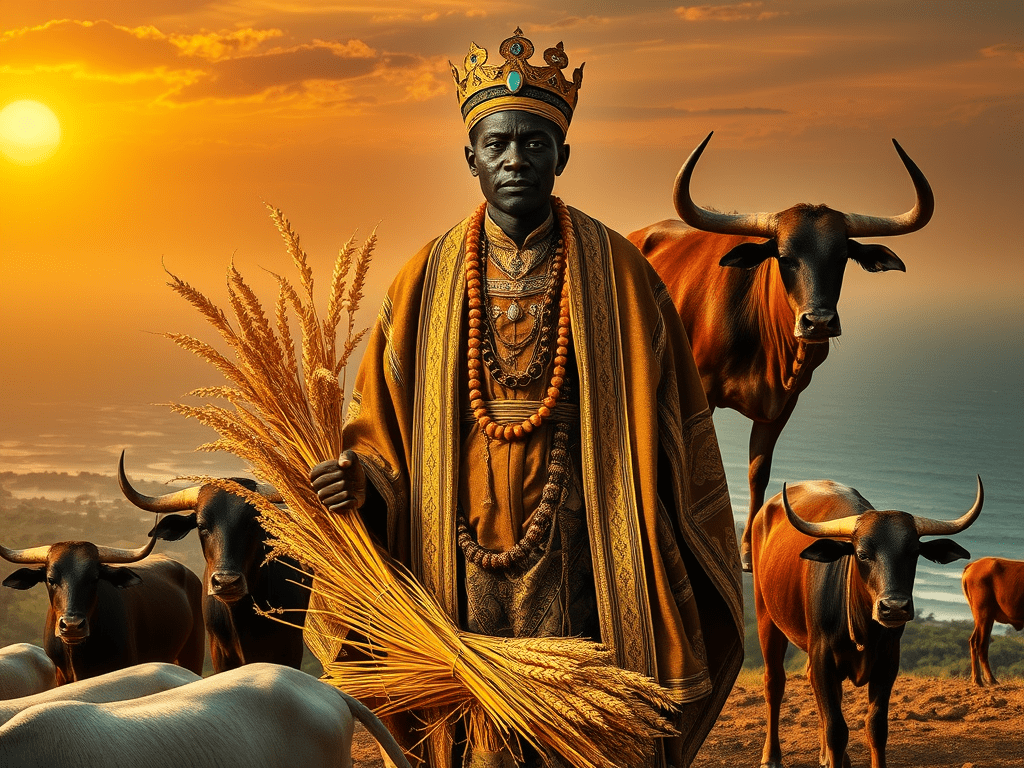
The Kingdom of Jolof (or Djolof) was a powerful and influential state that thrived in West Africa during the 14th to 16th centuries. Located in the Senegambian region, it is remembered for its sophisticated political system, cultural achievements, and pivotal role in regional trade. Although the kingdom eventually fragmented, its legacy continues to shape the history and identity of Senegal and its neighboring regions.
Origins of the Jolof Kingdom
The Founding of Jolof
The Kingdom of Jolof was founded around the 14th century, during a period of political centralization in the Senegambia region. Oral traditions attribute its establishment to Ndiadiane Ndiaye, a legendary figure believed to have united disparate groups under a single monarchy. Ndiadiane Ndiaye is celebrated as the kingdom’s first ruler, known as the Buur-ba Jolof, or the King of Jolof.
Jolof’s creation was influenced by the broader dynamics of the region, including the decline of the Ghana Empire and the rise of the Mali Empire. These shifts created a political vacuum that enabled Jolof to emerge as a centralized state.
Geography and Influence
The kingdom’s territory included much of modern-day Senegal, Gambia, and parts of Mauritania. It was centered around the city of Jolof (near modern Linguère in Senegal) and was bordered by the Atlantic Ocean to the west, making it a strategic hub for both inland and maritime trade.
Political Structure
The Kingdom of Jolof was organized as a centralized monarchy with a sophisticated hierarchy. At its peak, the Jolof Kingdom was a confederation of smaller states, each ruled by local chiefs or kings. These states included Cayor, Baol, Walo, Sine, and Saloum, which paid tribute to the Buur-ba Jolof.
The Buur-ba Jolof
The Buur-ba Jolof held supreme authority, serving as both a political and spiritual leader. The king was supported by a council of nobles and advisors who helped manage the affairs of the kingdom. This centralized system enabled the Jolof rulers to maintain control over their vast and diverse territory.
Local Governance
While the Buur-ba Jolof held ultimate power, the local rulers (called dames) retained a degree of autonomy. This balance of central and local governance helped sustain the kingdom’s stability for centuries.
Economy and Trade
Agriculture and Livelihood
The Kingdom of Jolof’s economy was primarily agrarian, with millet, rice, and sorghum as staple crops. Livestock farming, including cattle and sheep herding, also played a significant role. The fertile lands of the Senegal River Valley supported robust agricultural production.
Trade Networks
Jolof was a critical link in the trans-Saharan trade networks, connecting West Africa to North Africa and beyond. Goods such as gold, salt, ivory, and slaves were traded, with Jolof serving as both a supplier and a middleman. The kingdom’s proximity to the Atlantic coast also enabled participation in early European maritime trade, particularly with Portuguese merchants in the 15th century.
The arrival of Europeans marked a significant shift in trade dynamics. Portuguese explorers established trading posts along the coast, engaging in commerce with the Jolof Kingdom, including the burgeoning Atlantic slave trade.
Cultural Achievements
Language and Identity
The Wolof language was the primary language of the kingdom and served as a unifying factor among its diverse population. Wolof culture, including its oral traditions, music, and social customs, flourished during the Jolof period.
Art and Architecture
The Jolof Kingdom was known for its artistry, particularly in textiles, wood carving, and jewelry. Local artisans produced intricate works that reflected the kingdom’s wealth and sophistication. Traditional Wolof architecture, including palaces and mosques, showcased the craftsmanship and ingenuity of the time.
The Decline of Jolof
The Kingdom of Jolof began to decline in the 16th century due to both internal and external factors. Internal dissent among the tributary states led to fragmentation, as regions like Cayor and Baol sought greater independence. These divisions weakened Jolof’s central authority.
External pressures, including the growing influence of European powers along the coast, further destabilized the kingdom. The Atlantic slave trade intensified competition and conflict among West African states, contributing to Jolof’s fragmentation.
By the late 16th century, the Jolof Kingdom had dissolved into several smaller states, marking the end of its political unity. However, the Jolof legacy persisted through its cultural influence and historical memory.
Legacy of the Kingdom of Jolof
The Kingdom of Jolof remains a symbol of unity and cultural pride for the Wolof people and the broader Senegambian region. Its political structure, trade networks, and cultural achievements laid the foundation for later states in Senegal, such as the Kingdoms of Cayor and Baol.
Modern Senegalese identity draws heavily from the Wolof culture that flourished during the Jolof period. The region’s traditions, language, and historical narratives continue to reflect the enduring legacy of this once-great kingdom.
Conclusion
The Kingdom of Jolof was a beacon of political organization, cultural vibrancy, and economic prosperity in precolonial West Africa. While its decline marked the end of a unified state, its contributions to the region’s history remain invaluable. By studying Jolof’s history, we gain insight into the resilience and creativity of the Wolof people and their profound impact on the cultural tapestry of West Africa.





 Janga Wolof